Why Is Water Dripping from My Ceiling After Heavy Rain
A ceiling drip after heavy rain in Bay City usually means water found a way through the roof above, then travelled along the decking before it showed indoors. Here is how to trace it, what to do first, and when to call a roofer.
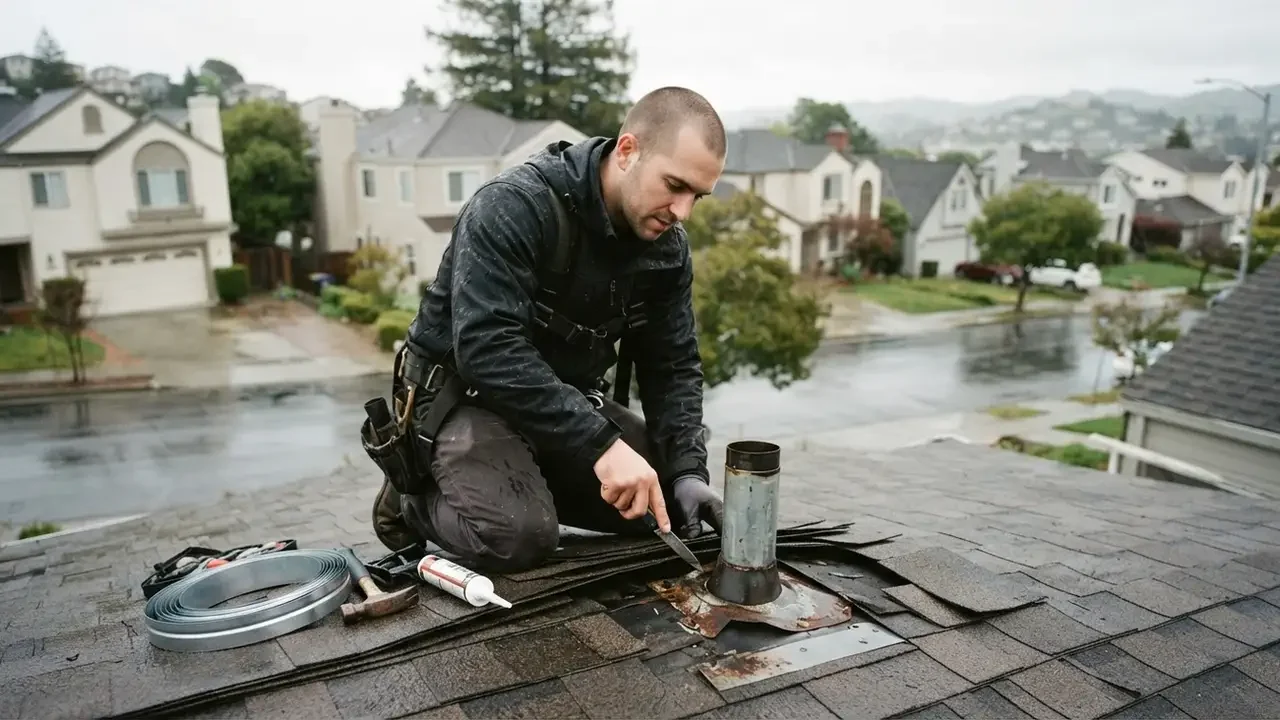
Water dripping from a ceiling after heavy rain is one of the most common roofing calls in Bay City, Texas, and it is also one of the most misunderstood. The drip you see is almost never directly below the hole in the roof. Water runs along the underside of the roof deck, follows a rafter or a seam, and drops through the ceiling at the lowest point it can reach. That is why a stain above a bedroom can come from a flashing failure ten feet away, and why a leak can seem to move from storm to storm.
Bay City gets about 47 inches of rain a year, and the wettest month is usually September, when a single slow-moving storm can drop several inches in a day. Hurricane Beryl, which came ashore near Matagorda on July 8, 2024, left 6.94 inches of rain at a gauge near Bay City and knocked trees onto homes across town. Roofs here are tested by wind-driven rain, not just by rain falling straight down, and that changes where leaks start and how they behave.
Why the Drip Is Rarely Directly Below the Leak
A roof is a sloped surface with layers. Rain that gets under a shingle or past a piece of flashing does not fall straight through. It runs downhill on top of the underlayment or along the deck boards until it finds a joint, a nail hole, or the edge of a board, and only then does it drip into the attic. From there it may soak insulation, run along a ceiling joist, and appear as a stain or drip some distance from the entry point.
Wind makes the path longer and less predictable. A gust from the southeast can push rain uphill under shingle edges and into valleys, while the same roof stays dry in a calm rain from the north. That is why a ceiling may drip in one storm and stay dry in the next, even though nothing on the roof changed. The entry point is the same; the wind direction is different.
Before anyone opens the roof, the useful question is not "where is the drip" but "where could water get in above this room, and which way would it travel". A roofer works that question backwards from the stain, checking the roof uphill from the drip and the attic space above the room.
What Heavy Rain Exposes That Light Rain Does Not
Light rain tests a roof gently. Heavy rain tests it all at once: valleys carry more water than they were moving an hour earlier, gutters fill and overflow, and wind drives rain sideways into joints that normally shed water by gravity alone. A small gap at a vent boot or a lifted shingle edge that never shows in a drizzle can let in a steady stream during a Gulf Coast downpour.
The wetter season in Bay City runs roughly from mid-May to late September, and September brings the heaviest monthly rain. That is also hurricane season, when a single storm can combine high wind with hours of rain. A roof that survived the dry months can start leaking in the first big storm of September, not because it suddenly failed, but because it had never been tested that hard since the last one.
Watch for the pattern. A drip that appears only during heavy rain and stops soon after points to an entry point that needs volume or wind to fail, such as a valley, a flashing joint, or a low-slope section. A drip that continues for a day or more after the rain stops points to water trapped in insulation or decking, which is a different problem and a more urgent one.
Check the Attic First, From Inside the House
The safest and most useful first check happens inside, not on the roof. If you can reach the attic safely during or just after rain, take a flashlight and look at the underside of the roof above the stained room. Look for damp deck boards, darkened wood, wet insulation, and daylight coming through a gap. Never step on the ceiling itself; walk only on joists or boards laid across them, and do not enter an attic with sagging or wet ceiling material below you.
Note what you see and where. A wet spot on the deck uphill from the ceiling stain is a strong clue. Staining on a rafter tells you the path water took. Damp insulation directly above the drip means water has been arriving there for a while, even if the ceiling only started dripping today. Take photos with your phone, including a wide shot that shows where the wet area sits relative to the room below. Those photos help a roofer and, if the damage is storm-related, your insurer.
If the attic is too hot to enter safely, wait. Bay City attics in summer can reach temperatures that make a quick check dangerous, and no leak is worth a heat injury. Check from the rooms below instead: mark the stain with a pencil line and the date, so you can tell whether it is growing after the next rain.
The Usual Entry Points on Bay City Roofs
Most ceiling drips in Bay City trace back to a short list of places. Valleys are first: two slopes meet there, so they carry the most water, and leaves and debris collect in them and hold moisture against the shingles. Flashing is second: the metal where a roof meets a chimney, a wall, a skylight, or a vent. Heat and humidity dry out sealant and crack mortar over time, and a flashing joint that was sound five years ago can open just enough to admit wind-driven rain.
Vent boots are third. The rubber collar around a plumbing vent dries and splits in Gulf Coast heat, and the split often sits on the uphill side where rain runs straight into it. Shingle edges are fourth: wind lifts a tab, rain gets under it, and the water runs down the underlayment until it finds a nail hole. Low-slope sections and flat roofs are fifth, because water moves slowly across them and any seam or ponding area has more time to leak.
Gutters matter more than most homeowners expect. When a gutter clogs during a heavy rain, water backs up under the eave and into the fascia and soffit, and it can appear indoors as a drip near an outside wall. If the drip is near a wall rather than in the middle of a room, check the gutter above it before assuming the roof covering has failed.
What to Do in the First Hour
Move furniture, electronics, and anything that water can ruin out from under the drip, and put a bucket or a large container below it. If water is spreading across the ceiling, lay towels along the path it is taking. If the ceiling is bulging downward and holding water, do not push on it from below without a bucket in place and a clear path to step back, because a bulge can release suddenly. A small, controlled release into a bucket is better than a collapse onto the floor, but if you are unsure, leave it and call for help.
Turn off power to any light fixture or ceiling fan the water is reaching, at the breaker, not just at the switch. Water and electricity together are a genuine hazard, and a wet fixture should stay off until it has dried and been checked. Do not use the room below the drip for sleeping until the leak is controlled and the ceiling is dry.
Then call a roofer and describe what you see: where the drip is, when it started, whether it is still raining, and whether the ceiling is sagging. Those four facts decide whether the visit is an emergency stabilization or a scheduled inspection, and they help the crew bring the right materials.
When a Ceiling Drip Is an Emergency
Call immediately, day or night, if water is streaming rather than dripping, if the ceiling is sagging or bulging, if water is reaching wiring or light fixtures, or if the leak started during a storm and is getting worse. A sagging ceiling can fail without warning, and a stream of water can soak insulation and decking in hours. An emergency visit in that case is about stabilization: stopping the water, protecting the interior, and making the roof safe until a permanent repair can be done properly.
A slow drip that appears only in heavy rain and stops when the rain stops is still a real leak, but it can usually wait for a scheduled inspection within a day or two, provided the ceiling is not sagging and no wiring is involved. Put a container under it, watch whether the stain grows, and do not let a slow drip run for weeks. Water that keeps arriving will rot decking, grow mold in insulation, and turn a small flashing repair into a much larger job.
After a hurricane or a major storm, treat every new ceiling stain as urgent even if it looks small. Beryl knocked trees onto Bay City homes and lifted shingles that did not leak on the day of the storm but leaked in the next heavy rain. A post-storm inspection that finds a lifted shingle early costs far less than a deck repair found a month later.
How a Roofer Traces the Source
A proper trace starts with the stain, not with a guess. The roofer checks the attic for the wet path, then inspects the roof uphill from the drip, looking at valleys, flashing, vent boots, and shingle edges in that order. A moisture meter can show how far dampness has spread in the deck, and a controlled water test, applying water to one section at a time from the lowest suspect area upward, can confirm the entry point without tearing the roof apart.
What you should expect at the end is a plain explanation: where the water is getting in, what has to be replaced or resealed to stop it, what nearby areas were checked, and what it will cost to do the work properly. Be wary of any recommendation that starts with a full replacement before the entry point has been found. Most ceiling drips in Bay City are fixed with a targeted repair at the actual entry point, not by replacing a roof that is otherwise sound.
Ask the roofer to show you the damaged area, either in person or with photos, and to explain what will be different after the repair. A repair that stops this drip but leaves a cracked vent boot a few feet away is only half a job, and the next heavy rain will prove it.
Get Help With a Ceiling Leak in Bay City, Texas
If water is dripping from your ceiling after heavy rain, Bay City Roofing, TX can trace the source and explain the repair before any work starts. Call (877) 791-3217 to describe where the drip is and when it started, and we will help you decide whether you need an emergency visit or a scheduled inspection.