Why Does My Roof Leak Around the Chimney Only Sometimes
A chimney leak that appears only in some storms usually comes down to wind direction. Rain driven from one side finds a flashing gap that calm rain never reaches.
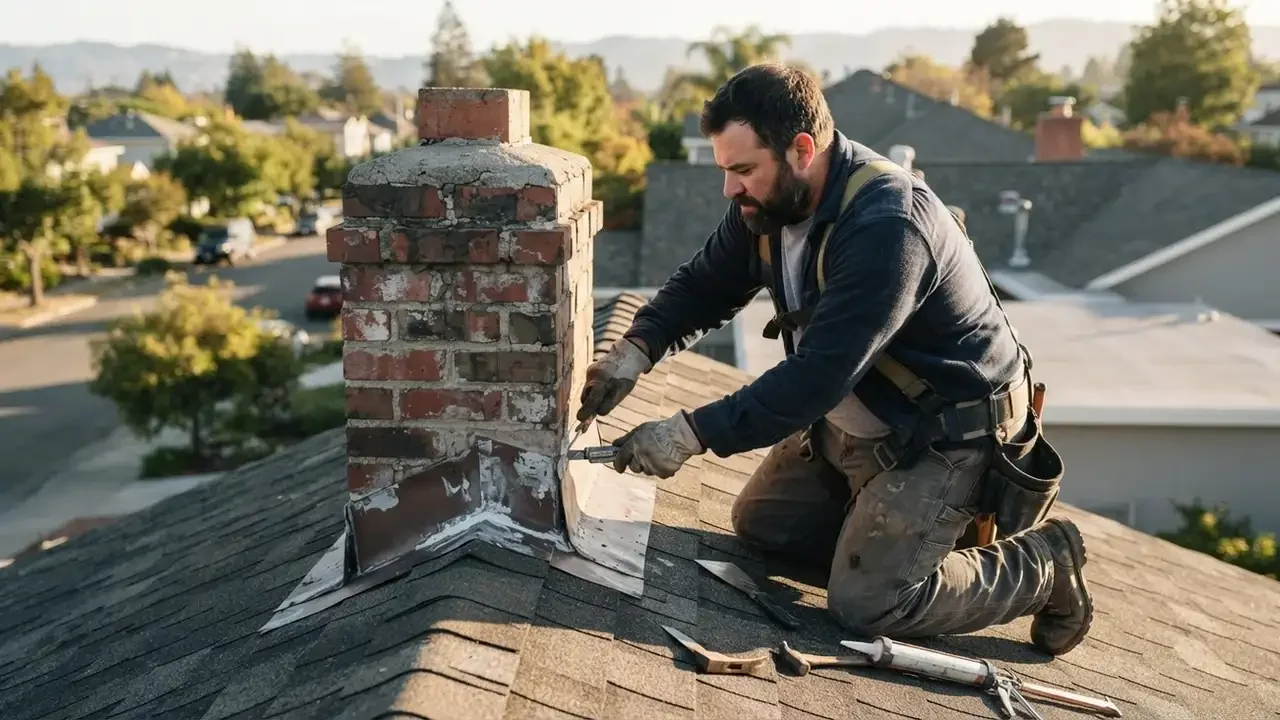
A roof that leaks around the chimney only sometimes is one of the most frustrating problems a Bay City homeowner can have, because it feels random. It is not random. A chimney leak depends on which way the wind is blowing, how hard the rain is falling, and which side of the chimney the water hits first. A storm from the southeast can drive rain straight into a gap on the south face of the chimney, while a storm from the north leaves the same chimney completely dry.
Bay City sits about 20 miles from the Gulf of Mexico, and the wind here often arrives with the rain rather than after it. Hurricane Beryl came ashore near Matagorda on July 8, 2024 with gusts near 90 mph, and even ordinary Gulf storms push rain sideways across a roof. That is the condition that exposes a chimney flashing weakness, and it is why a leak can appear in one storm and vanish for months.
Wind Direction Decides When It Leaks
A chimney sticks up through the roof, so it catches rain from every direction, but the flashing around it does not fail evenly. The uphill side, the side facing the ridge, takes water running down the slope. The downhill side takes water running off the chimney itself. The two side faces take wind-driven rain. A gap on one face only leaks when wind pushes rain against that face, which is why the same chimney can leak in a southeast storm and stay dry in a northwest one.
Keep a simple note each time it leaks: the date, the wind direction if you know it, and how hard the rain was falling. After two or three leaks, a pattern usually appears. That pattern is the most useful thing you can hand a roofer, because it tells them which face of the chimney to test first instead of resealing the whole thing and hoping.
The same logic explains why a chimney leak often shows up inside the house some distance from the chimney. Water that gets past the flashing runs down the deck or along a rafter before it drips through the ceiling, so a stain in the room next to the chimney can still be a chimney leak. The attic check matters more than the stain location.
How Chimney Flashing Is Supposed to Work
Chimney flashing is really two systems working together. Step flashing is a series of small metal pieces woven into the shingle courses on the sides of the chimney, so each piece sheds water onto the shingle below it. Counter-flashing is a second layer set into the mortar joints of the chimney itself, folded down over the top edge of the step flashing. Water running down the chimney hits the counter-flashing and is thrown clear of the joint; water running down the roof hits the step flashing and is carried past the chimney.
On the uphill side, a wide chimney needs a cricket, a small peaked ridge that splits the water running down the slope and sends it around the chimney instead of letting it pile up against the brick. Without a cricket, water ponds against the uphill face, finds the smallest gap, and works its way in. Many older Bay City chimneys were built without one, and the uphill face is where their leaks start.
Every part of that system has to overlap in the right direction, like shingles on a roof. One piece installed backwards, one gap in the counter-flashing, or one missing step flashing piece is enough to let wind-driven rain in, even while the rest of the roof is sound.
Why Sealant Alone Keeps Failing Here
The most common fix a homeowner tries is a bead of sealant around the base of the chimney, and it is also the fix that fails most often. Sealant is a surface dressing, not a flashing system. It sits on top of the joint, it is exposed to sun and rain, and it moves as the chimney and the roof expand and contract at different rates in the heat. In Bay City, where August highs average around 92 degrees and summer humidity stays high for months, a sealant bead can dry, crack, and pull away within a season or two.
Sealant also hides the problem. A fresh bead looks like a repair, so the leak stops being watched, while water keeps finding the gap underneath it and soaking the decking out of sight. By the time the stain returns, the deck around the chimney may be soft. If a chimney has been resealed more than once and still leaks, the flashing underneath needs to be inspected and corrected, not sealed again.
There is a place for sealant in a proper chimney repair, but it is as a secondary seal inside a correctly flashed joint, not as the joint itself. A roofer who proposes sealant alone for a recurring chimney leak is treating the symptom.
Heat, Humidity, and Mortar Cracks
Bay City roofs do not face freeze and thaw, because the city gets no snow and winter lows rarely threaten masonry. The forces that open a chimney joint here are heat, moisture, and movement. Summer sun bakes the south and west faces of a chimney, mortar joints dry and shrink, and hairline cracks open in the mortar where the counter-flashing is set. Humid air keeps the brick damp, and damp brick grows moss and algae that hold more moisture against the joint.
The chimney itself moves slightly as it heats and cools, while the roof deck moves with moisture and temperature in a different rhythm. That small, repeated movement works on the counter-flashing over years, loosening its grip in the mortar joint. Once a gap opens at the top of the counter-flashing, rain running down the chimney goes straight behind it and into the roof.
Look at the chimney from the ground with binoculars after a dry spell. Cracked or missing mortar, a counter-flashing edge that has pulled away from the brick, rust staining, or a dark damp band on the brick just above the roofline are all signs the joint needs attention before the next storm, not after it.
How a Roofer Finds an Intermittent Chimney Leak
An intermittent leak cannot be found by looking at the roof on a dry day and guessing. The reliable method is a controlled water test. The roofer starts low, wetting one small area at a time, and waits to see whether water appears inside, before moving to the next area. The chimney faces are tested one at a time, and the uphill side and the cricket area are tested separately from the side faces. When water appears after one specific area is wetted, the entry point is found.
The attic is checked at the same time. Damp decking, staining on the rafters beside the chimney, and wet insulation tell the roofer which face the water came through, even when the roof surface looks fine. A moisture meter can show dampness in wood that still looks dry to the eye.
What you should get at the end is a specific finding, not a general one: which face, which piece of flashing, and what has to change. If the proposal is to reseal the whole chimney without naming the failed detail, the leak will probably return with the next storm from the same direction.
The Proper Fix, and What It Involves
A proper chimney flashing repair removes the shingles around the base of the chimney, takes out the failed flashing, and rebuilds the system in the right order: underlayment, step flashing woven into new shingle courses, counter-flashing set into sound mortar joints, and a cricket on the uphill side if the chimney is wide enough to need one. The mortar joints that hold the counter-flashing are repointed first, because new flashing set into cracked mortar will loosen again.
The work is done in dry weather, because the roof has to be open while the flashing is replaced. That is one reason to fix an intermittent chimney leak when you find it, rather than waiting for the next storm season. A chimney repair booked in a dry week is a controlled job; the same repair booked after a storm, with water already coming in, is an emergency.
After the repair, the roofer should check the repair with water before leaving, and show you photos of the finished flashing. Ask what was replaced, what was reused, and what to watch for. A flashing repair that is done properly should outlast the shingles around it.
What to Watch After the Repair
Watch the ceiling and the attic through the next two or three storms from different directions. A repair that holds in a southeast rain and a northwest rain has solved the problem; a repair that holds in one and leaks in the other has not. Note the wind direction each time, just as you did before the repair, so you can compare fairly.
Check the chimney from the ground once a year, looking for new mortar cracks and any flashing edge that has lifted. Mortar ages, and a chimney that was sound this year can open a new joint in two or three years. A short annual look, ideally before the wettest months, catches that early. September is Bay City's wettest month on average, so late summer is the right time for that check.
Get Help With a Chimney Leak in Bay City, Texas
If your roof leaks around the chimney only in some storms, Bay City Roofing, TX can test each face of the chimney and find the exact gap instead of resealing the whole thing. Call (877) 791-3217 to describe when the leak appears, and we will help you plan a proper flashing repair.