Preparing Your Roof for Bay City Rainy Season
Bay City's wettest weather arrives in late summer, and the roofs that leak in September are usually the ones nobody looked at in May. A short checklist now prevents the worst of it.
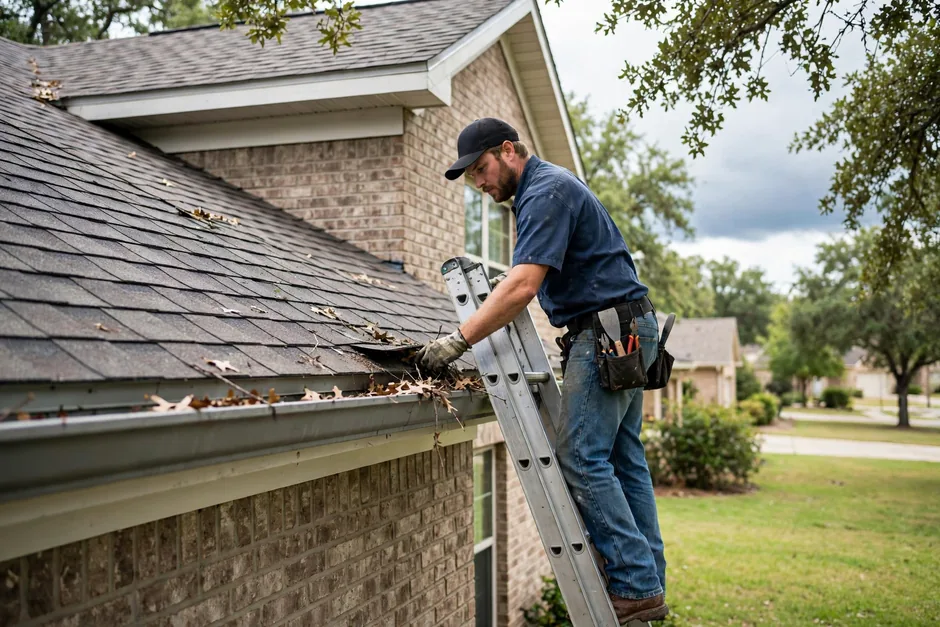
Bay City gets about 47 inches of rain a year, and the heaviest of it comes in late summer. September is the wettest month on average, and the wetter season runs roughly from mid-May to late September. That is also hurricane season. The roofs that leak in September are usually not the roofs that failed suddenly; they are the roofs that had a small problem in May, a lifted shingle, a cracked vent boot, a clogged valley, and nobody looked until the rain found it.
Preparing a roof for the rainy season is a short job when it is done early, and a long one when it is done after the first leak. This guide is a checklist for a Bay City roof, in the order that matters, with the local details that make the difference here: the September peak, the hurricane season, the trees, and the damage that Hurricane Beryl left behind in July 2024.
When Bay City's Rainy Season Really Runs
Rain falls in Bay City all year, but it concentrates in the warmer months. The wetter season runs roughly from mid-May to late September, with September the wettest month, averaging around four to five inches. The drier months are late autumn through early spring, which is the best window for planned roof work, because the roof is dry and the crew can work without racing the weather.
Hurricane season runs from June through November, and the Gulf Coast peak is late August through September. That overlap matters: the wettest month and the most dangerous storms arrive together. A roof that is ready for ordinary September rain is not automatically ready for a tropical storm, which adds wind-driven rain and flying debris to the same volume of water.
The practical calendar is simple. Inspect and repair in late spring, before the wetter season starts. Check again in late summer, before September. And after any named storm, inspect again, even if nothing is leaking, because storm damage often shows up in the next heavy rain rather than on the day of the storm.
Start With the Gutters and Downspouts
Gutters are the first thing to check, because they are the most common cause of a leak that is not really a roof leak. When a gutter clogs, water backs up under the eave and into the fascia and soffit, and it can appear indoors as a drip near an outside wall. In Bay City, where mature trees drop leaves and debris for much of the year, a gutter can clog in a single season.
Clean the gutters and downspouts completely, and run water through them to check the flow. Look for sagging sections, separated joints, and downspouts that discharge against the foundation instead of away from it. Check that the water actually leaves the downspout and runs away from the house, because a downspout that dumps water at the base of a wall will soak the soil and the foundation over a wet season.
Do this in late spring, and do it again before September. A gutter that was clean in May can be full again by August, and the September rains will test it at its worst. If the gutters overflow in an ordinary rain, they are not ready for a September storm.
Valleys, Flashing, and Vent Boots
After the gutters, check the three places where Bay City roofs most often leak. Valleys carry the most water, because two slopes drain into them, and they collect leaves and debris that hold moisture against the shingles. Clear the valleys from the ground or have a roofer clear them, and look for granule loss, lifted edges, and debris dams that slow the water down.
Flashing is next: the metal where the roof meets a chimney, a wall, a skylight, or a vent. Heat and humidity dry out sealant and crack mortar over time, and a flashing joint that was sound last year can open just enough to admit wind-driven rain. Look for lifted edges, rust, and gaps, and remember that a flashing problem is a repair, not a reseal. A bead of sealant over a failed joint will not hold through a wet season.
Vent boots are the smallest and most overlooked item on the list. The rubber collar around a plumbing vent dries and splits in Gulf Coast heat, and the split often sits on the uphill side, where rain runs straight into it. A cracked boot is a cheap repair and a common leak, and it is worth checking every year before the rainy season.
Trees Over the Roof
Bay City has mature trees, and their branches overhang many roofs. Over a wet season, branches drop leaves into valleys and gutters, rub against shingles in the wind, and shade the roof so it stays damp longer after rain. A branch that rubs a shingle will wear through the granules, and a branch that falls in a storm will damage whatever it lands on.
Before the rainy season, trim back any branch that touches or overhangs the roof, and remove dead limbs that could fall in a storm. This is tree work, not roof work, and it should be done by someone who can do it without damaging the roof or the tree. Hurricane Beryl knocked trees onto homes across Bay City in July 2024, and many of those trees had dead limbs that a pre-season check would have found.
Do not ignore the trees after the season either. A branch that grew over the roof during the summer will be a problem in the next wet season, and a tree that was damaged in a storm may be unstable for months afterwards. A short look at the trees each spring is part of roof preparation here.
The Attic Check Most People Skip
The attic tells you what the roof is doing, and it is the check most homeowners skip. Before the rainy season, look at the underside of the roof deck for damp spots, darkened wood, and staining on the rafters. Check the insulation for dampness or compression, and look for daylight coming through any gap. Note anything you find with a photo and the date, so you can compare it after the season.
Check the ventilation at the same time. A Bay City attic needs to breathe, because hot, humid air trapped in the attic cooks shingles from underneath and feeds moisture into the deck. Look for blocked soffit vents, insulation covering the vents, and an attic that feels stifling even in the morning. Poor ventilation shortens shingle life and makes a roof more likely to leak in a wet season, and it is one of the cheapest problems to fix before the rain arrives.
Do not enter an attic in extreme heat, and do not step on the ceiling material. If the attic is too hot to check safely, do the check early in the morning, or ask a roofer to include it in a pre-season inspection.
After Beryl: Look for Damage That Has Not Leaked Yet
Hurricane Beryl came ashore near Matagorda on July 8, 2024 with gusts near 90 mph, and it left damage across Matagorda County that is still being found. A lifted shingle, a loosened flashing, or a cracked vent boot from Beryl may not have leaked on the day of the storm, because the rain that day came from one direction. It may leak in the next heavy rain from another direction, months later, and by then the decking underneath may be soaked.
If your roof has not been inspected since Beryl, have it inspected before the next rainy season, even if nothing is leaking. The inspection should look for lifted shingle edges, creased shingles, missing granules in patches, loose flashing, and damaged vent boots, all of which are storm signatures. Photograph anything that is found, and keep the photos with the date of the storm, because they are the record for any insurance claim.
The same advice applies after any named storm. A post-storm inspection that finds a lifted shingle early costs far less than a deck repair found a month later, and it gives you a baseline to compare against after the next storm.
In the 48 Hours Before a Named Storm
When a named storm is forecast for the Gulf Coast, the preparation changes from seasonal to immediate. Clear the gutters and downspouts one more time, and make sure the downspouts discharge away from the house. Bring in or secure anything in the yard that could become a projectile. Trim any branch that is already touching the roof, if it can be done safely from the ground.
Inside the house, move valuables away from the rooms under the roof, and have buckets, towels, and plastic sheeting ready. Know where your insurance documents are, and have a roofer's number saved in your phone. Photograph the roof from the ground and the rooms below it, so you have a record of the condition before the storm.
Do not climb onto the roof in the hours before a storm, and do not try to nail a tarp down in high wind. If the roof is already damaged and open to the weather, call a roofer for an emergency tarp, and do it early, because crews book up fast once a storm is named. The 48 hours before a storm are for preparation from the ground and from inside the house, not for roof work.
Get Your Roof Ready in Bay City, Texas
If your roof has not been checked since last season, or since Hurricane Beryl, Bay City Roofing, TX can inspect it, clear the valleys and gutters, and fix the small problems before the rain finds them. Call (877) 791-3217 to arrange a pre-season inspection and get a plain report on the condition of your roof.