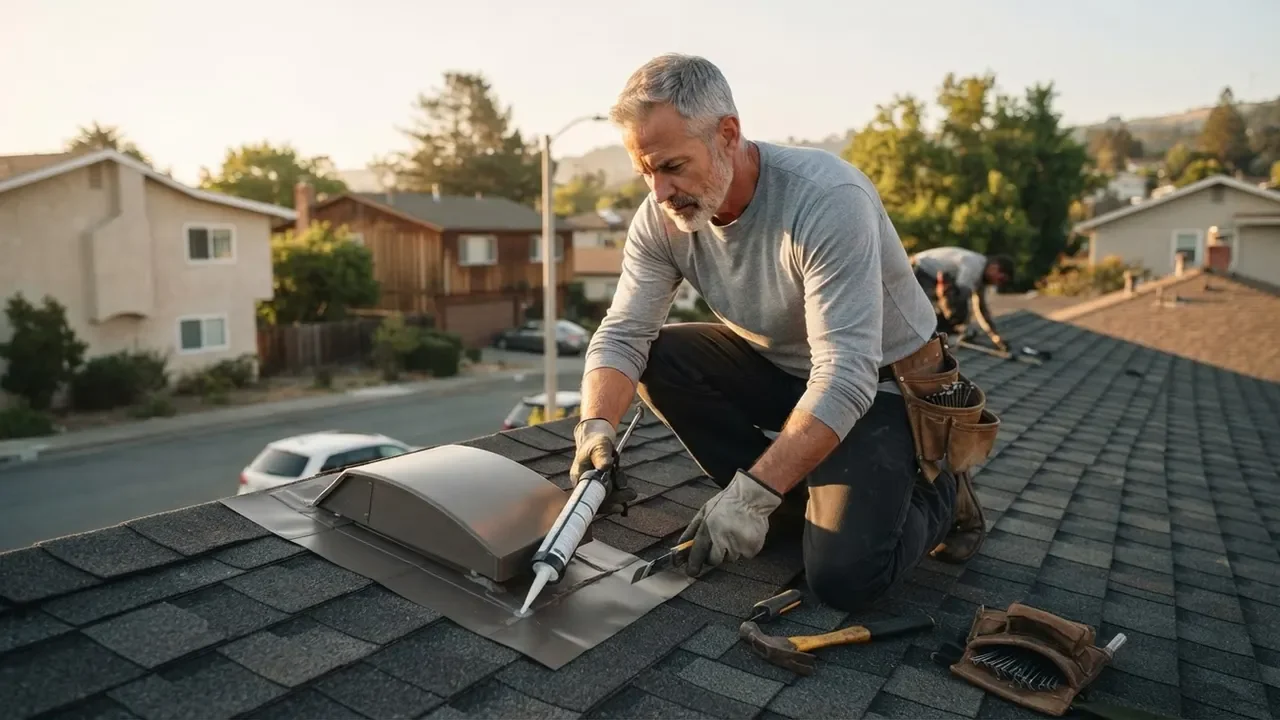
How to Choose Between Shingle and Metal Roof Repair
On a Gulf Coast roof, the choice between shingle and metal repair is really a choice about wind, salt air, and how the next storm treats your fasteners. Here is how they compare in Bay City.
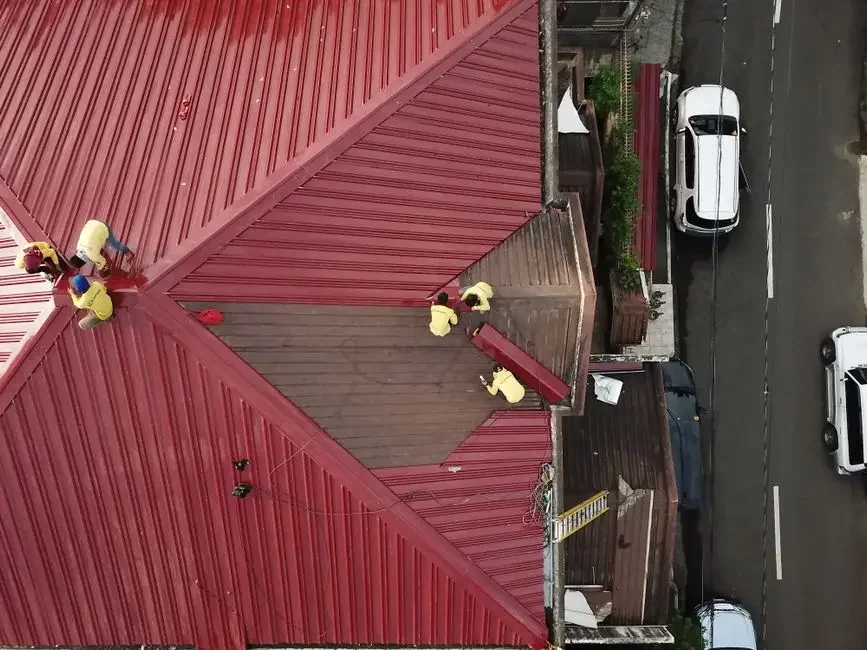
Bay City homeowners facing a roof repair often hear two recommendations at once: repair it in shingles, or switch to metal. Both can be right, and both can be wrong, because the decision depends less on the material in the abstract than on the roof you already have, the wind it must survive, and the way it was installed. A shingle repair on a sound shingle roof is usually the sensible choice. A metal repair on a metal roof is usually the only choice. The real decision comes when a roof is failing and a change of material is on the table.
Bay City sits about 20 miles from the Gulf of Mexico in Matagorda County, and its roofs are tested by wind-driven rain, salt air, and summer heat. Hurricane Beryl came ashore near Matagorda on July 8, 2024 with gusts near 90 mph. A roof here has to hold its covering in that kind of wind, keep salt air from eating its fasteners, and shed about 47 inches of rain a year. Those three demands shape the shingle-versus-metal question more than any brochure does.
Start With the Roof You Already Have
The first rule is simple: repair a roof in the material it already has, unless there is a clear reason to change. A shingle roof with a few lifted shingles and sound surrounding courses is repaired with matching shingles. A metal roof with a failed seam or a loose panel is repaired with matching metal. Mixing materials on a single roof creates joints between different systems that expand, contract, and shed water differently, and those joints become the next leak.
A change of material is a replacement decision, not a repair decision. It means removing the old covering, checking the deck, and installing a new system with its own underlayment, flashing, and fastening pattern. That is a bigger job with a bigger scope, and it should be judged on its own merits, not as a way to fix a single leak.
Before comparing materials, ask a roofer to assess the deck and the underlayment, not just the covering. A shingle roof with a sound deck and a metal roof with a corroded fastener line can both be repaired, but the work and the cost are completely different, and the material comparison only makes sense once the condition of the structure underneath is known.
Wind: What the Coast Demands From Both
Wind is the decisive factor on this coast. Matagorda County is one of 14 first-tier coastal counties in the Texas Department of Insurance catastrophe area, and the design wind speeds used for roofs here are 130 mph or more. That number is not a forecast; it is the standard the roof assembly has to be built to. Both shingles and metal can meet it, but only when they are installed to the right fastening pattern.
For shingles, the coastal standard means architectural shingles with a high wind rating, six nails per shingle, and a fastening pattern rated for coastal use. The rating to ask about is the ASTM D7158 Class H wind rating, which is the level required in the most exposed coastal zones. A shingle without a coastal wind rating, or a shingle installed with four nails instead of six, is a poor choice this close to the Gulf, however good it looks on the day it is installed.
For metal, the equivalent is a standing-seam system with concealed fasteners and clips spaced to the tested wind-uplift rating for the panel. The clip spacing is not a detail to leave to habit; it is what holds the panel down in a gust. Exposed-fastener metal, where screws go through the panel face, is cheaper and common on outbuildings, but every screw is a potential leak and a corrosion point in salt air, and it is a weaker choice for a home this close to the coast.
Beryl is a useful reference point. Gusts near 90 mph lifted shingles and peeled back metal panels across Matagorda County, and the failures were overwhelmingly at fastenings and edges, not in the middle of a panel or a shingle field. The material mattered less than the fastening.
Salt Air and Corrosion
Salt air is the slow problem that wind is not. Bay City is far enough inland that salt damage is slower than on the beachfront, but close enough that it still matters over the life of a roof. Salt corrodes exposed steel fasteners, rusts unprotected flashing, and attacks the cut edges of metal panels. A roof that looks sound from the street can be failing at its fasteners, one rusted screw at a time.
Shingles hide this problem better, because their fasteners are covered by the course above. But they are not immune: the nails under a shingle can corrode in humid, salt-laden air, and a shingle whose nails have corroded can slide or lift even though the shingle itself looks fine. That is one reason a coastal roof inspection should check fastening, not just the visible surface.
Metal shows corrosion sooner, which is both a weakness and an advantage. A standing-seam roof with concealed clips and aluminum or properly coated steel panels resists salt well, because the fasteners are protected and the panel surface is coated. An exposed-fastener roof in the same air will need its screws checked and replaced on a schedule, and a screw that is left to rust will eventually leak. If you choose metal, the choice of panel, coating, and fastener matters as much as the choice of metal itself.
Heat, Noise, and Rain
Heat is a real difference between the two. A dark shingle roof absorbs heat, and in a Bay City summer, with August highs averaging around 92 degrees, the roof surface runs far hotter than the air. That heat ages asphalt, dries sealant, and warms the attic. A metal roof, especially a light-colored standing-seam roof, reflects more of the sun's heat, and the air gap under a standing-seam panel helps it shed heat. The practical result is a cooler attic and slower aging of the roof assembly, provided the attic is ventilated properly either way.
Noise is the worry most people have about metal, and it is mostly a matter of installation. A metal roof over solid decking with proper underlayment is not dramatically louder than shingles in ordinary rain. It is louder in a hard downpour or hail, because metal transmits impact sound and shingles absorb it. Bay City gets about 47 inches of rain a year, so this is not a rare condition, and it is worth hearing a metal roof in heavy rain before choosing one, if you can.
Rain shedding is a strength of both when they are installed correctly. Metal sheds water fast and does not depend on granules for protection. Shingles shed water through overlapping courses, which works well until a course is lifted or a seal fails. On a low-slope roof, neither is ideal without the right underlayment and detailing, and the slope of your roof may decide the question before the material does.
How Repairs Differ in Practice
A shingle repair is a local job. A roofer lifts the surrounding courses, removes the damaged shingles, and installs matching ones, resealing the courses above and below. The challenge is matching: shingles fade in the sun, and a new shingle on a ten-year-old roof will look different, even if it performs the same. On a visible slope, that matters to some homeowners and not to others, and it is worth discussing before the work starts.
A metal repair is a panel job. A damaged standing-seam panel usually has to be replaced as a whole panel, because a patch on a seam is a weak point, and the replacement panel has to match the profile, the coating, and the color of the original. If the original panel is no longer made, or the color has faded, matching can be difficult, and a repair can turn into a larger section replacement. A failed seam can sometimes be re-crimped, and a loose clip can be replaced, but a dented or torn panel is a replacement.
The cost of a repair follows the same logic. A shingle repair is usually a small job with common materials. A metal repair can be a small job or a large one, depending on whether the panel is available and whether the damage is at a seam, a clip, or a penetration. Neither is inherently cheaper; the answer depends on the damage, not the material.
The WPI-8 Question for a Full Re-Roof
If the repair decision becomes a replacement decision, one question matters more in Matagorda County than anywhere else in Texas: the windstorm certification. A full re-roof in a designated catastrophe area needs inspections by the Texas Department of Insurance while the work is under way, so a WPI-8 certificate of compliance can be issued. Without it, a property may not be eligible for windstorm and hail coverage through the Texas Windstorm Insurance Association.
The inspections happen in stages, and they cannot be done after the fact. The deck and its fastening are inspected before the underlayment goes down. The underlayment, including self-adhered membrane at eaves, valleys, and penetrations, is inspected before the covering goes on. The final fastening pattern is checked against the tested assembly for the rated wind speed. Miss a stage and the certificate cannot be issued for that work, which is why the inspections must be scheduled before the old roof comes off.
This applies to both materials equally. A shingle re-roof and a metal re-roof both need the same inspections and the same certificate. A contractor who does re-roofs in Matagorda County should be able to explain the inspection schedule plainly, and should file the WPI-1 application before the work starts. If that explanation is missing, the price is not the problem; the planning is.
Which One Fits Your House
Choose shingles when the roof is shingle already and the damage is local, when the budget favors a repair over a replacement, and when the roof's slope and structure suit an overlapping covering. Architectural shingles with a coastal wind rating, six nails per shingle, and proper underlayment are a sound Gulf Coast roof, and they are the most common choice in Bay City for good reason.
Choose metal when the roof is metal already, when the house will be held for a long time and the longer service life justifies the larger investment, or when the roof has a history of shingle failures in wind that a stronger fastening system would solve. A standing-seam roof with concealed fasteners is the coastal version of metal; an exposed-fastener roof is a different product with different maintenance needs, and the two should not be confused.
Either way, the decision should be made on the condition of the deck, the slope of the roof, the exposure to wind and salt, and the inspection requirements, in that order. A material chosen for its looks and installed without regard for fastening and wind will fail in the next storm, whatever it is made of.
Get Help Deciding in Bay City, Texas
If you are weighing a shingle repair against a metal repair, or a repair against a replacement, Bay City Roofing, TX can inspect your roof, show you the condition of the covering and the deck, and explain the options without pushing you toward the most expensive one. Call (877) 791-3217 to arrange an inspection and get a plain comparison for your house.