Emergency Roof Repair Cost in Bay City and When to Call
An emergency roof call is about stopping water now, not about a fixed price. What it costs depends on the damage, the roof, and the hour, and this guide explains each factor before you call.
When water is coming through the roof at night or during a storm, the first question is not what it will cost. It is how fast someone can stop the water. The cost question comes second, and it deserves a straight answer: there is no single price for an emergency roof repair in Bay City, because the price depends on what is damaged, how the roof is built, when the call comes in, and whether the job is a stabilization or a permanent repair. What this guide does is explain each factor, so you can judge a quote fairly and avoid the two mistakes that cost homeowners the most: waiting too long, and signing too fast.
Bay City roofs face emergencies most often during the wettest months and after tropical storms. Hurricane Beryl came ashore near Matagorda on July 8, 2024 with gusts near 90 mph, knocked trees onto homes in Bay City, and left more than 2.7 million customers without power across Texas. In the days after a storm like that, emergency roofing calls are about tarps, stabilization, and documentation, and the permanent repair comes later, once the roof can be properly inspected in dry conditions.
What Counts as a Roofing Emergency
An emergency is any roof condition that is letting water in now, or that could let water in with the next rain and cannot wait. Active water entry is the clearest case: a stream through the ceiling, a rapidly growing stain, or water reaching wiring and light fixtures. A section of roof covering torn away by wind is an emergency even if it is not raining yet, because the next rain will come through the opening. A tree on the roof is an emergency, because the weight and the branches can open the deck further and the tree has to be removed by the right crew before the roof can be assessed.
A sagging ceiling is an emergency even if the drip looks slow, because a ceiling holding water can fail without warning. So is a sagging or soft section of roof deck, which can mean the structure underneath has been soaked. If you are unsure whether a situation is an emergency, describe it to a roofer by phone and let them decide. A good roofer will tell you when a problem can wait a day and when it cannot, and that phone call costs nothing.
Not everything that feels urgent is an emergency. A small stain that appears only in heavy rain and stops when the rain stops, with no sagging and no wiring involved, is a real leak, but it can usually wait for a scheduled inspection within a day or two. A few missing shingles on a slope with no interior leak can also wait for dry weather, provided the exposed area is not letting water in.
What an Emergency Visit Actually Includes
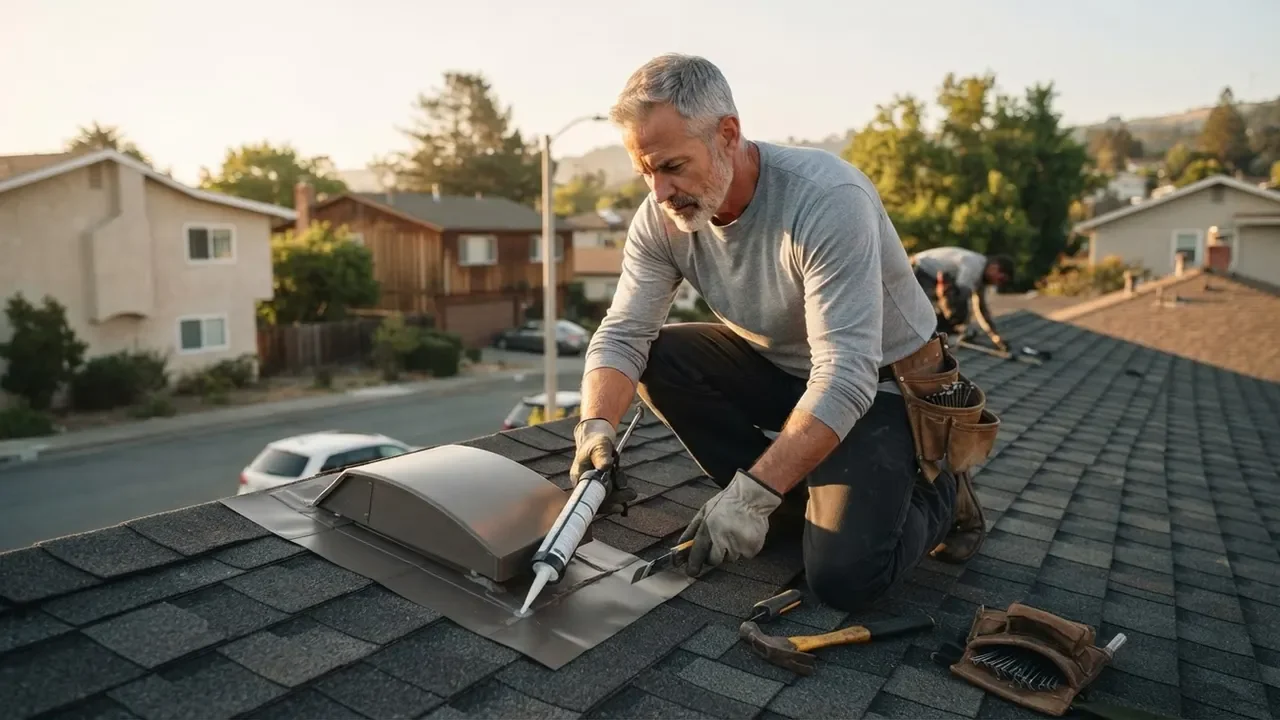
An emergency visit has one job: stop the water and make the home safe. That usually means a temporary cover, such as a properly secured tarp over the damaged area, interior water control, and a check for hazards such as a sagging ceiling or exposed wiring. The crew will photograph the damage, note what they find, and explain what the permanent repair will involve and when it can be scheduled.
What an emergency visit does not usually include is the permanent repair itself. A proper repair needs dry conditions, the right materials, and often an inspection of the deck and underlayment that cannot be done safely in the rain. A roofer who offers to complete a permanent repair in the middle of a storm is either cutting corners or does not understand the work. The honest sequence is stabilize now, repair properly in dry weather.
Ask the crew to show you what they did and to leave you a written note of the temporary work and the planned permanent scope. That note is useful for your insurer, and it protects you from a later disagreement about what was temporary and what was permanent.
The Factors That Set the Cost
The first factor is the extent of the damage. A small area of lifted shingles that needs a tarp and a local repair costs far less than a section of roof torn open by a fallen tree, which may need deck work, underlayment, and a larger area of new covering. The second factor is the roof itself: its height, its pitch, its material, and how easy it is to reach safely. A steep, high roof costs more to work on than a low, walkable one, because it needs more safety equipment and more time.
The third factor is the material. Shingle repairs use common materials that a crew usually carries. Metal repairs may need a matching panel that has to be ordered, and tile or slate repairs need specialist materials and handling. The fourth factor is the hour. A call in the middle of the night or during a storm, when crews are working in difficult conditions, costs more than the same job in daylight, because it uses overtime labor and carries more risk.
The fifth factor is what is found underneath. A leak that looks small from outside can reveal rotted decking or soaked insulation once the covering is lifted, and that changes the scope. A roofer who finds additional damage should stop, show you what they found, and explain the revised scope before continuing, rather than folding it silently into the bill.
No honest roofer will give a firm price for an emergency repair sight unseen, and you should be wary of one who does. What you can reasonably ask for by phone is how the price is structured, what the emergency visit includes, and whether the cost of the temporary work is credited against the permanent repair.
Tarping, Repair, or Replacement
Tarping is the most common emergency measure, and it is the right one when the damage is open to the weather and a permanent repair cannot be done yet. A proper tarp runs past the damage on all sides and over the ridge where needed, is held down with boards rather than nails through the covering, and is checked after the next rain. A tarp that is too small, or held down with bricks, is not protecting the home.
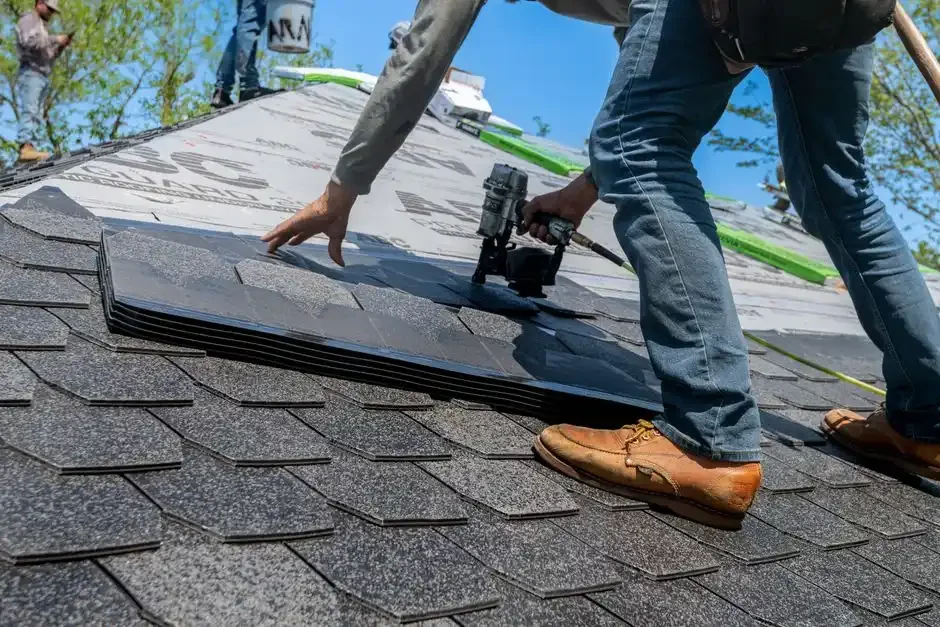
A permanent repair follows once the roof is dry and can be inspected. That repair replaces the damaged covering, checks the underlayment and deck, and restores the flashing and fastening in the affected area. A repair is the right answer when the damage is limited and the rest of the roof is sound.
Replacement becomes the question when the damage is widespread, when the roof has been patched repeatedly, or when the covering is already near the end of its life. After a major storm, a roof with damage on multiple slopes and a history of leaks may be better replaced than patched, but that decision should be made after a full inspection in dry conditions, with the insurer's assessment in hand, not in the first hours after the storm.
Insurance, TWIA, and the Adjuster Visit
Most Bay City homeowners who carry windstorm coverage get it through the Texas Windstorm Insurance Association, because Matagorda County is one of the 14 first-tier coastal counties in the state's catastrophe area. Windstorm coverage pays for wind and hail damage, and it is often a separate policy from the main homeowner's policy. The details, deductibles, and exclusions are in your own policy, and your insurer makes the coverage decision.
The practical rules for a claim are the same whatever the policy says. Report the damage promptly. Photograph everything before repairs: the roof from the ground, the interior damage, the attic if you can reach it safely, and any material that came off the roof. Keep receipts for emergency materials and temporary work. And avoid permanent repairs before an adjuster has inspected the damage, because a repair made before inspection can make it impossible to prove what the storm damaged. Temporary protection, such as a tarp and interior water control, is expected and should not wait.
For a full re-roof in Matagorda County, there is an additional step: windstorm inspections by the Texas Department of Insurance while the work is under way, so a WPI-8 certificate can be issued. Those inspections cannot be done after the work is finished, so they must be scheduled before the old roof comes off. A contractor who does re-roofs here should explain that schedule without being asked.
After a Hurricane: Watch for Storm Chasers
After a major storm, out-of-town roofing crews arrive in Matagorda County within days, knocking on doors and offering immediate repairs. Some are legitimate. Many are not, and the pattern is well known: a low price quoted at the door, a demand for a large payment upfront, work that starts and is left unfinished, or a repair that fails in the next rain, by which time the crew has moved on to the next town.
Protect yourself with three habits. First, do not sign anything at the door. Take the card, and check the company on your own time. Second, do not pay a large sum before the work starts; a reasonable deposit for materials is one thing, full payment upfront is another. Third, get the scope in writing before the work begins: what will be replaced, what materials will be used, what the warranty covers, and what happens if a leak returns.
Ask any roofer for proof of general liability and workers' compensation coverage, and ask how the work will meet the windstorm inspection requirements for Matagorda County. A local company that can answer those questions plainly and show recent local work is a safer choice than a crew that arrived yesterday and leaves tomorrow.
What to Have Ready When You Call
When you call a roofer about an emergency, five facts help the crew help you. Where is the water coming in, and which room? When did it start, and is it still raining? Is the ceiling sagging, and is water reaching any wiring or light fixtures? Is there a tree on the roof, or a section of covering visibly missing? And is anyone in the home in immediate danger from water or a sagging ceiling?
Those answers decide whether the visit is an emergency stabilization or a scheduled inspection, what materials the crew should bring, and how many people the job needs. They also help the roofer give you a fair idea of the visit and the temporary work before anyone arrives. Take photos while you wait, and keep a bucket under the drip.
Get Emergency Roof Help in Bay City, Texas
If water is coming through your roof now, or a storm has left your roof open to the next rain, Bay City Roofing, TX can stabilize the damage and plan the permanent repair. Call (877) 791-3217 and describe where the water is and when it started, so the crew can bring the right materials.